


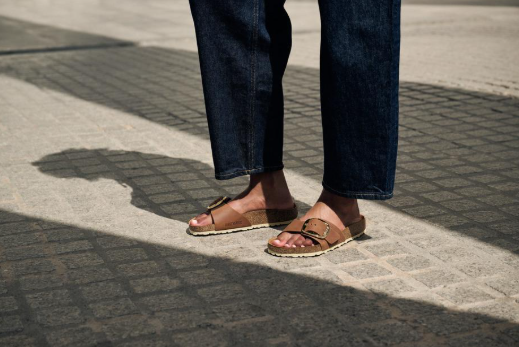
You’ve stood in the shoe aisle, one hand on a regular pair of sandals and eyes drifting toward something premium that costs more. The question isn’t dramatic. It’s practical. What are you actually paying for?
Let’s break it down, honestly.
1. The Footbed: Where Everything Either Goes Right or Goes Wrong
Regular sandals typically offer a flat, foam-padded base. It feels fine in the shop. By hour three of a summer market, your arches are filing a formal complaint.
Premium sandals, by contrast, are engineered with contoured footbeds that distribute your body weight more evenly. Many use cork or latex composites that gradually mould to the shape of your foot over time. Arch support helps reduce strain on the foot, especially for women who stand for long hours.
2. Materials
| Feature | Regular Sandals | Premium Sandals |
| Upper material | Synthetic PU or fabric | Full-grain leather or natural suede |
| Footbed | Flat EVA foam | Cork, latex, or memory compound |
| Outsole | Thin rubber or plastic | Grippy, textured rubber |
| Stitching | Machine-glued | Reinforced, hand-finished |
3. Longevity: The Maths Is Uncomfortable
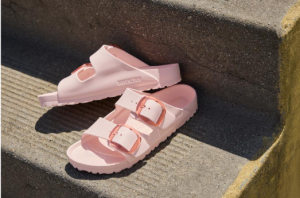
A regular pair of sandals that lasts one season versus a premium pair that lasts a decade. Spread over ten years, the premium option is actually the frugal choice.
Styles like the classic two-strap Arizona or the toe-post Gizeh from Birkenstock have remained largely unchanged for decades, partly because they work and partly because they are built to outlast trends. Women’s flip-flop sandals, in particular, benefit enormously from premium construction, since the toe-post design places significant stress on a single point of contact between the shoe and your foot.
4. Break-In Period: Premium Asks More of You, Initially
That initial firmness in a premium sandal is not a flaw. It is the material doing something remarkable. Cork footbeds gradually mould to the unique contours of your foot over one to two weeks, creating what is essentially a bespoke fit no factory could replicate from the outset.
Regular sandals skip this stage because there is nothing to personalise. The foam compresses the same way for every foot, every time.
Good things, as it turns out, are worth a fortnight.
5. Design Longevity: Fashion vs. Function
Regular sandals chase seasonal trends aggressively, which means they often look dated within eighteen months. Premium sandals tend toward timeless silhouettes.
Take the Mayari or Madrid styles that have circulated across decades without dramatic redesigns. Women’s sandals that follow this philosophy are investments in a wardrobe staple rather than a seasonal experiment.
Women’s flip flop sandals, which historically leaned disposable, are now seeing a genuine premium tier emerge with brands like Birkenstock investing in anatomical toe-post placement, wider straps for even pressure distribution, and natural materials throughout.
6. The Sustainability Argument
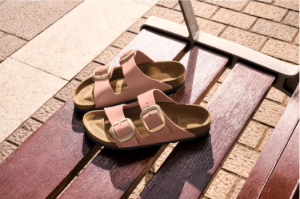
Fast fashion footwear contributes significantly to landfill waste. A pair of poorly made men’s or women’s sandals bought three times a decade generates more waste than one well-made pair bought once.
This is not a lecture. It is simply a number that lands differently when you frame it as an environmental cost rather than a retail price.
7. So, Should You Buy Premium?
Ask yourself three questions:
- Do you wear sandals more than 60 days per year?
- Do you have any foot issues, including arch pain, pronation, or plantar sensitivity?
- Are you tired of replacing the same style annually?
If the answer to any of these is yes, the premium is worth the conversation.
If you wear sandals twice a summer to a barbeque, a regular pair will do perfectly well. Context matters enormously.
The Bottom Line
Regular sandals solve a problem in the short term. Premium sandals, particularly those with contoured footbeds and quality leather uppers, solve it permanently.
Your feet carry you through everything; it makes sense to choose something designed to support them properly.