


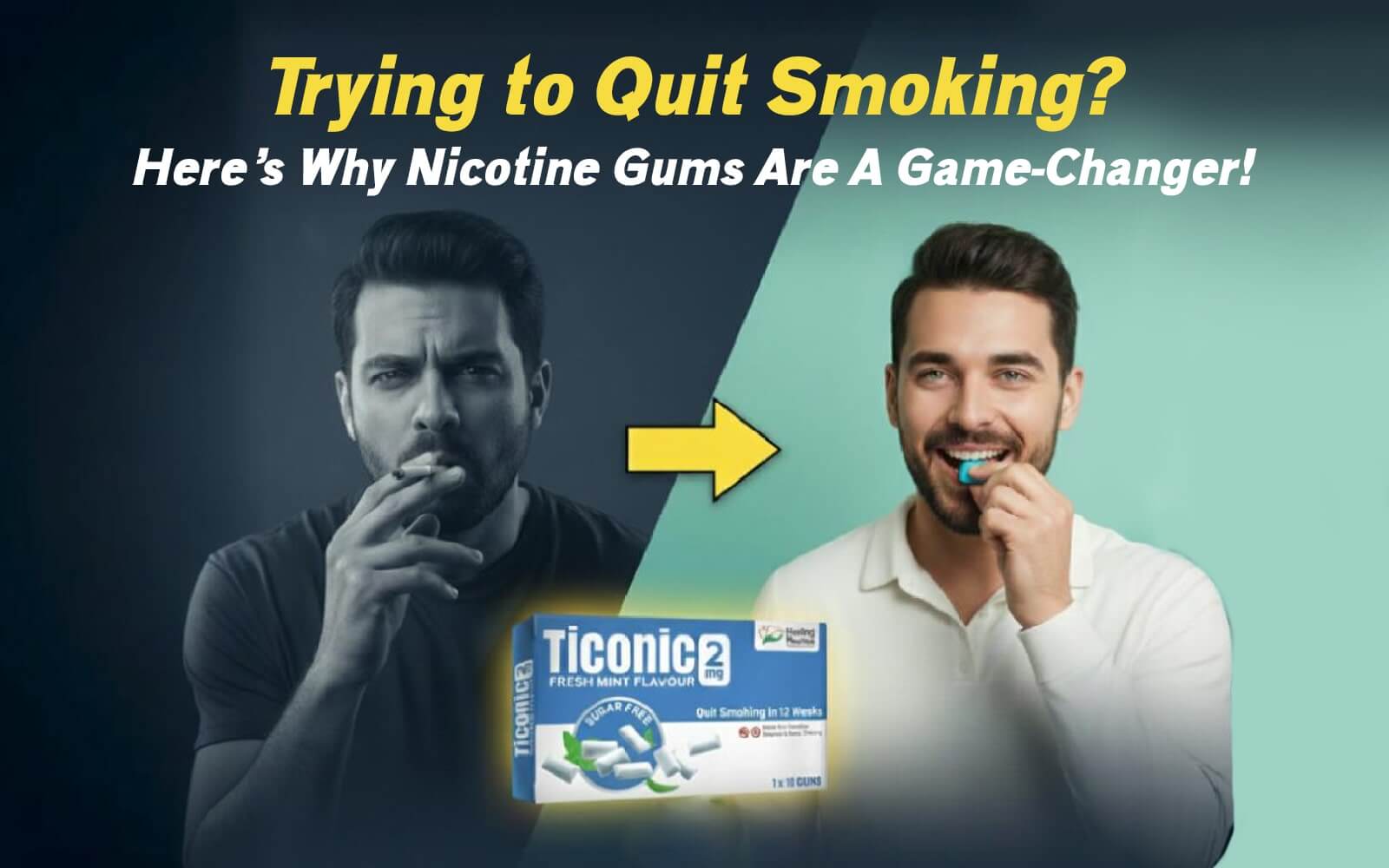
Quitting smoking is challenging due to both habitual behaviour and physical dependence on nicotine. Nicotine replacement therapy helps manage this dependence, and nicotine gum remains one of the most widely used options. But does nicotine gum work in real life? This article explores how nicotine gum works, who may benefit from it, and how to use it correctly to improve quit outcomes.
What Is Nicotine Gum and How Does It Work?
Nicotine gum delivers small, controlled amounts of nicotine through the lining of the mouth. This helps reduce withdrawal symptoms such as cravings, irritability, restlessness, and difficulty concentrating, without exposing the lungs to harmful smoke. Unlike cigarettes, which deliver nicotine rapidly, the gum releases it more slowly. This steadier delivery helps manage urges while you break behavioural smoking habits, such as lighting up during stress or after meals.
Does Nicotine Gum Really Increase Quit Rates?
Yes, when used correctly. Research consistently shows that nicotine gum can significantly improve the chances of quitting compared with going “cold turkey.” People using nicotine gum are more likely to stay smoke-free, particularly when the gum is used regularly and for an adequate duration.
Success rates are even higher when nicotine gum is combined with behavioural support, such as counselling, quit-smoking programmes, or digital support tools. The gum tackles physical cravings, while support helps change routines and triggers.
Who Benefits Most from Nicotine Gum?
Nicotine gum tends to work best for:
- Light to moderate smokers who want control over when they manage cravings
- People with strong oral habits, who miss the hand-to-mouth action of smoking
- Those who experience sudden urges, as gum can be used on demand
It may be less suitable for people with jaw problems, dental issues, or those who dislike the taste or chewing sensation.
How to Use Nicotine Gum Correctly
Using nicotine gum the right way is key to getting results.
- Choose the right strength: Lower-strength gum is often recommended for lighter smokers, while higher-strength options may suit heavier smokers.
- Use the “chew and park” method: Chew slowly until you feel a tingling sensation, then park the gum between your cheek and gum. This allows nicotine to absorb properly.
- Chew regularly, not just when desperate: Scheduled use in the early weeks helps prevent cravings rather than chasing them.
- Avoid food and acidic drinks (like coffee or fizzy drinks) just before or during use, as they can reduce nicotine absorption.
Most people use nicotine gum for several weeks to a few months, gradually reducing frequency as cravings subside.
Benefits and Limitations
Benefits
- Helps reduce withdrawal symptoms
- Gives users control over cravings
- Smoke-free and discreet
- Can be combined with other NRT options
Limitations
- Requires correct technique
- Possible side effects such as hiccups, jaw discomfort, or mouth irritation
- Doesn’t address behavioural triggers on its own
Conclusion
So, is nicotine gum worth trying? Nicotine gum does work for smoking cessation, especially for people who use it properly and stay consistent. While it’s not a magic solution, it can be a powerful tool when paired with motivation and behavioural support. Quitting smoking is a journey, and for many, nicotine gum makes that journey more manageable and far more achievable.